
PRODUCTIVITY &
&
UTILITY APPS
Driving Adoption Through Demonstrated Value
People don’t download productivity apps because they want more tools—they download them because they want fewer problems. Whether it’s saving time, simplifying workflows, or removing friction from everyday tasks, users only switch to a new platform when the value feels immediate and practical. We help productivity and utility apps turn functionality into real-world outcomes—building creator-led campaigns that make adoption feel worthwhile.
Why Demonstration Matters More Than Features
In this category, users care less about capabilities and more about outcomes. Most productivity apps compete on feature lists, but users decide based on whether the product clearly improves their existing workflow. The biggest challenge isn’t awareness—it’s overcoming the switching cost of changing habits and systems. We position your app through creators who demonstrate practical use cases in real situations—making the value obvious before the first login.
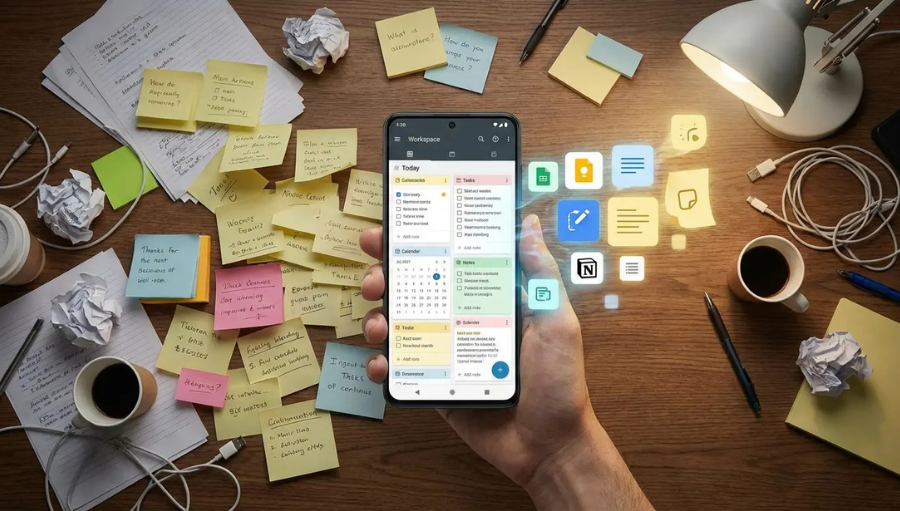
From Discovery to Daily Workflow A Complete Growth Approach
We design strategies that connect your app to the routines users already live in: Partnering with creators whose audiences match your product’s use case Creating workflow-driven content focused on before-and-after outcomes Demonstrating real productivity improvements through practical scenarios Supporting user retention with ongoing feature education and visibility Building campaigns around long-term habit formation, not short-term installs Every campaign is designed to move beyond downloads—helping users integrate your app into their daily workflows and routines.

FAQ
Switching tools requires effort, learning, and risk. Users already have systems—even if they’re inefficient—and changing them means breaking habits and rebuilding workflows. Unless the benefit is immediately clear, most users prefer to stay where they are.
Content that shows real usage performs best. Walkthroughs, workflow examples, and “day-in-the-life” scenarios help users understand how the app fits into their routine before they even download it.
Context is everything. A tool only feels valuable when it’s shown solving a problem in a situation the viewer recognizes. Without context, even useful tools feel abstract and unnecessary.
Many users only understand one use case at the time of download. If they don’t quickly discover additional value or integrate the app into their routine, it becomes easy to abandon.
Habit is a major factor. Productivity tools only work if they become part of daily behavior. If the app doesn’t integrate smoothly into existing habits, users are unlikely to stick with it.
By showing real comparisons. Demonstrating how a task is done before and after using the app helps users understand the time saved and effort reduced in a tangible way.
No. Most users only need to understand one relevant benefit. The goal is to make the first use case obvious, then allow deeper functionality to reveal itself over time.
Yes. When users are presented with too many options at once, it creates confusion instead of clarity. Simplicity at the start helps users understand value before exploring depth.
They compare effort vs payoff. If the time saved or clarity gained feels significantly higher than the time needed to learn it, the tool feels worth adopting.
A specific, relatable task being completed faster or more clearly. When users see their own problem solved in real time, the value becomes tangible.